
AI for Logistics & 3PL
Start with the process. Then automate what makes sense.
3PL operations are full of repetitive, information-heavy work — but the best AI implementations do not begin with a chatbot, an agent, or a model.
They begin by understanding how freight actually moves through the business, from sales and customer requests through carrier sourcing, order entry, dispatch, tracking, exceptions, and billing.
We map the process first, identify where friction and repetitive effort live, then design AI and automation around the operation.

Process Before Technology
AI should follow the workflow — not the other way around.
Before deciding what to automate, you need to understand how the work happens today.
Where does information enter the business? Who touches it? Which decisions are routine? Which ones require judgment? Where are employees re-keying information? Where do delays and errors occur? Where do systems fail to communicate? And where are experienced people spending time on work that does not really require their experience?
Once the process is understood, you can decide what should be automated, what should be assisted, and what should remain human-controlled.
Where information enters the business
Who touches it and when
Which decisions are repetitive
Which decisions require judgment
Where information is entered more than once
Where delays and errors occur
Where systems fail to communicate
Where exceptions consume experienced staff time
Across the 3PL Lifecycle
Where AI opportunities tend to appear
A 3PL is constantly moving information between customers, carriers, employees, documents, and business systems.
That creates opportunities for AI and automation throughout the shipment lifecycle — but the right opportunity depends on how each operation actually works.
Sales & Account Development
Potential opportunities include account research, qualification, CRM intelligence, follow-up support, and helping salespeople prepare for better conversations.
Customer Requests & Quoting
AI can help interpret incoming shipment requests, identify missing information, organize requirements, and support repetitive quote preparation.
Carrier Sourcing & Rate Negotiation
Potential opportunities include carrier research, historical information, suitability checks, information gathering, and decision support.
Order Entry & Documentation
Information can be extracted from emails and documents, validated, and moved into the appropriate business systems with less repetitive manual entry.
Dispatch & Communication
Routine communication can be supported or automated while ensuring the correct shipment information reaches customers, carriers, and internal staff.
Track & Trace
Routine status collection and customer updates can potentially be automated while shipments requiring intervention are surfaced to experienced staff.
Exceptions & Service Issues
AI can help identify and organize situations such as:
- delays
- border issues
- claims
- missing documents
- pricing discrepancies
- service failures
The goal is to bring the right exception to the right person with the relevant information.
Billing & Closeout
AI and automation can help identify missing documents, discrepancies, and incomplete information before shipments are ready for invoicing and closeout.
Where People Add the Most Value
Automate the routine. Escalate the exceptions.
The goal is not to automate every decision inside a 3PL.
A large amount of logistics work is predictable and repetitive — reading information, moving data between systems, checking status, preparing routine communication, and following established processes.
That is where AI and automation can potentially remove significant effort.
Experienced logistics people create the most value when something does not go according to plan.
Capacity disappears. A driver is late. A border issue develops. Freight is damaged. Documentation is missing. A customer needs an answer now.
The opportunity is to let technology handle more of the routine flow while putting exceptions, context, and recommended next steps in front of the people best equipped to make the decision.
Routine Workflow
AI & Automation
Exception Identified
Experienced Human
AI Has to Work in the Real Operation
Freight still has to move.
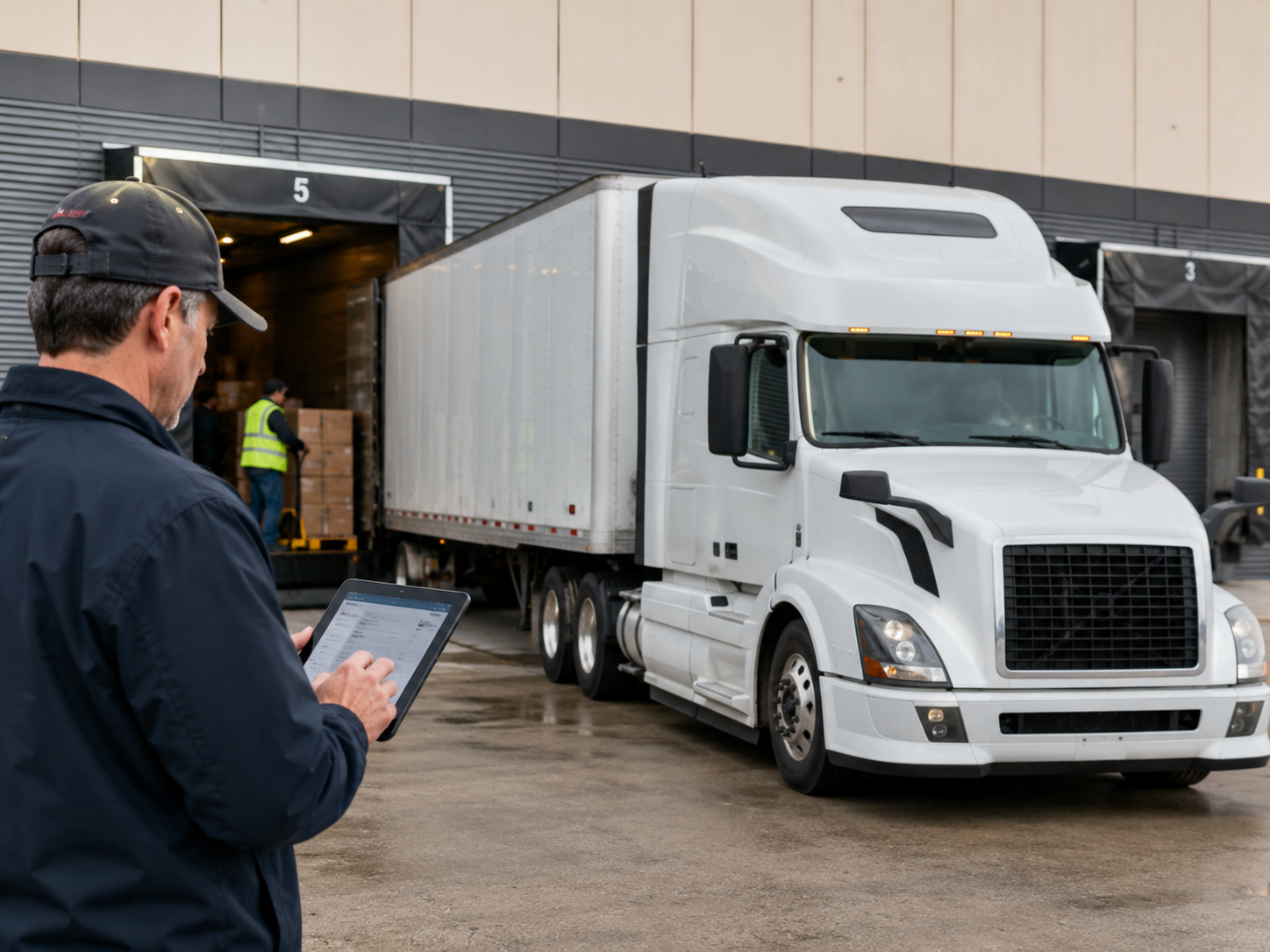
A successful AI implementation has to work with the realities of transportation — customers, carriers, drivers, warehouses, documents, deadlines, changing conditions, and existing systems.
The technology is valuable only when it improves the actual operation.
That means integrating AI into the way the business already works rather than building an isolated demonstration that employees have to work around.
Integrated, Not Isolated
AI does not replace your TMS.
Most 3PLs already have systems that run critical parts of the business.
The opportunity is often to connect intelligence and automation across the tools already in place rather than replacing everything with a new platform.
Depending on the process, a solution may involve:
AI Models
AI Agents
TMS
CRM
Documents
APIs & Automation
Business Data
Human Review
A Practical Implementation Approach
Start with one process.
A 3PL does not need to automate the entire operation at once.
Start with a process that consumes too much time, creates too many errors, or requires employees to repeatedly move information between people and systems.
Map it.
Measure it.
Identify what should improve.
Then determine whether AI, automation, integration, or a combination of technologies can produce a meaningful result.
Once the first process works, the same approach can be applied elsewhere in the operation.
01
Map the Process
02
Find the Friction
03
Implement the Solution
04
Measure & Expand
Industry Experience Matters
Logistics experience plus hands-on technology implementation
AI implementation inside a 3PL requires more than understanding AI.
You need to understand why the work exists in the first place — how customers buy, how freight is quoted, how carriers are sourced, how orders move through operations, where exceptions develop, and how information eventually becomes an invoice.
iGo AI combines direct 3PL operating experience with hands-on experience implementing CRM, automation, integrations, business systems, and applied AI.
That combination allows us to start with the operation rather than the technology.
3PL Operations
Understanding of the day-to-day realities of brokerage and logistics operations.
B2B Sales
Experience with prospecting, qualification, customer relationships, quoting, and revenue development.
Business Systems
Hands-on experience with CRM, workflow automation, APIs, integrations, and data.
Applied AI
Using AI and automation to improve real business processes rather than create isolated demos.
Start With the Process
Bring us one 3PL process that consumes too much time.
We will look at how the work happens today, where the friction exists, and whether AI or automation can create a practical improvement.
You do not need an AI strategy before the conversation.
You need a business process worth improving.